Am I My Brother’s Keeper?

Good morning everyone!

Hey I just wanted to put this out there:  as you go about enjoying your weekend don’t forget to ask yourself this question – the question Cain threw back at Yahweh for asking about his brother’s absence:  “Am I my brother’s keeper?”  Don’t allow that question to be just about Cain’s biological brother. Let it be what it truly is: The question we should ask ourselves when we look into the face of another – and especially in the face of a fellow Christian (Galatians 6:10).  We are created for fellowship. To keep a watch for the spiritual and physical well-being of those alongside whom we are destined to share eternity.  Jesus, in the midst of a busy time of ministry is told that his mother and brothers have come to see him.  His response is found in three gospels – Matthew 12, Mark 3, and Luke 8.  According to Luke 8:19-21:  “rThen his mother and shis brothers1 came to him, but they could not reach him because of the crowd.  And he was told, “Your mother and your brothers are standing outside, desiring to see you.”  But he answered them, “My mother and my brothers are those twho hear the word of God and do it.”Lets start there.  What do you see,or better said who do you see?  And more importantly, who is it that Jesus wants you to see?  

Jesus himself expands on this foundational question beyond care just for the spiritual, ethnic, and biological family. When asked about how to inherit eternal life (which seems like a question Jesus received regularly – especially from religious people who thought they were already on the right path 🙂 Jesus responds with the parable that we’ve titled The Good Samaritan (Luke 10:25-37).  At the end of his story Jesus asks:  “Which of these three do you think was a neighbor to the man who fell into the hands of robbers?” The expert in the law replied, “The one who had mercy on him.” Jesus told him, “Go and do likewise.” (Luke 10:36-37)

Jesus is pointing us down the path that leads to LIFE not death, towards COMPASSIONATE CARE not complacency.  May we all take time this weekend to reflect on how the same questions that stirred in the hearts of God’s people thousands of years ago are put to us today.  And we too, have the option to respond to those questions of our responsibilities for others either in spirit of Cain or the Spirit of Mercy.  

Blessings…

Sabbath

I’m circling back around to a classic, The Sabbath, by Abraham Joshua Heschel. If there is any one habit that the modern Western Christian (ie us!) needs to recuperate it’s this one. When you get a chance, also check out this introduction and first three chapters from The Book of Jubilees. Though not considered a canonical text by evangelicals it gives valuable insight into the mind of people around the time of the arrival of Christ and how they understood the world (and its organization). Time and how we believe it is structured in SUPER important – especially …..The Sabbath!!!!

Finding the Themes of Scripture

More to Say on the Benefits of Scripture Saturation

It is no stretch of the imagination to say that for most Christians in the USA, the majority of their Bible reading comes through resources like daily devotionals or life application readings of Scripture sections that address their current challenges (i.e., the Bible as a Christian therapy text).  Moreover, those things are not necessarily bad, but they can disfigure what any given biblical passage was initially trying to communicate.  That is why we need to study the Word, not just tap it in a moment of need.  However, sometimes, too, the way study is presented is incredibly dry, often solely to undergird some Christian doctrine, and leaves one with the feeling of, “Ok, I learned some fun-facts about Paul or the church in Thessalonica, but… that is about it.”  My point is that reading the Bible is simply an act of obedience, or at the very least, it will have you engaging more with the text; however, over the long haul, it is little more than excellent head knowledge.  

What I propose is that we teach the reading of Scripture according to the thematic frameworks that are clearly present (though not so clearly present at first, I will grant you).  Once our minds grasp the pattern recognition (which our brains naturally love – learning through association is how He wired our brains to acquire, process, and integrate information), it is like an entirely new world opens up to the student.  This is not easy, and it is not a constant dopamine fix—but that is the point: the work is the prize, and the results of gaining understanding spur our hearts and minds on to deepen our relationship with the Lord, His Word, and the Interpretive Community (the Church).  Therefore, reading the Bible through thematic patterns is essential for grasping its more profound meaning and narrative coherence. The Bible is not merely a collection of isolated teachings or moral lessons; it is a unified story woven with recurring motifs that give shape and significance to its message. Themes such as Exile and return, the inclusion of outsiders, and symbolic geography—such as the city or the East—serve as interpretive keys that connect disparate passages and reveal theological depth.

Exile, for example, is a recurring theme throughout the Hebrew Bible (the Christian Old Testament), but the term itself (Hebrew גָּלוּת; pronounced “galut”) first appears in 2 Kings 25:27, referring to the initial deportation of Judeans to Babylon.  However, the concept of failed responsibility (rebellion against a divinely given task) followed by judgment (separation from the task/role and its blessings), with the promise of restoration (a return of status/place/benefits, etc) is there from the very beginning with Adam and Eve, the Serpent and the Garden.  Adam, the divine image-bearer, is given the responsibility to “work it and keep” the garden (Genesis 2:15-a priestly role).  He is derelict in his duties, rebelling against God in obedience to his wife and the serpent and is stripped of his duties, the cherubim taking his place as Garden Guard (Genesis 3:24).  But all hope is not lost.  In Genesis 4:1 Eve declares, at the birth of her firstborn: “With the help of the LORD I have brought forth a man”; a type of the promise that God would provide a man to avenge the first couple:  “I will cause hostility between you [the serpent] and the woman, and between your offspring and her offspring. He will strike your head, and you will strike his heel” (Genesis 3:15).  This pattern is seen again and again, generationally, personally, nationally, etc., and is one of the stories that determines human history.

From Adam’s being driven out of the Garden (Gen. 3:22-24) to Cain’s similar fate (Gen. 4:14-16, Exile, then, is the theme that ties together both an ideal past and an idealized future with a complicated, tenuous, and uncertain present.  So the question is, “How are we supposed to conduct ourselves in exile?”  For the Christian, this is precisely our situation. According to James, we are living “in the diaspora” (James 1:1); that is, the scattered people of God doing their best to remain faithful outside the land of promise (1 Peter 1:1 denominates us the “elect refugees of the dispersion, and 1 Peter 2:11 as “sojourners and exiles” in relationship to the current operating system of the world).

After Deliverance, Then What?  Many Called, Few Chosen

Greetings.  Here is a reflection on how the grace of God offers us opportunities to attain glory (Romans 2:7) – opportunities that not all of us take advantage of, and that is okay.  Well, it is okay in the sense that one can seek after it in a way that does not lead to a harsh,   judgmental spirit towards those who settle for other things. 

In the early 6th century before Christ, 1:16the Babylonian Empire conquered the southern kingdom of Judah, destroyed Jerusalem and its temple, and deported many of the elite (royal family, priests, etc.) from Judah to Babylon. This traumatic event, known as the Babylonian Exile, raised existential questions for the Jewish people: Had God abandoned his chosen people? Could they worship Him outside the land of promise? (In the theology of the ancient world, deities were closely related to a nation’s geographical borders.) Was the covenant that their fathers Abraham, Isaac, Jacob (and David) made with Yahweh still intact?

Into this confusion, the prophet Jeremiah writes a letter recorded in Jeremiah 29, addressed to the exiles now living under Babylonian rule. Rather than encouraging resistance or rebellion, Jeremiah delivers a stunning and countercultural word from God:

“Build houses and settle down; plant gardens and eat what they produce… Seek the peace and prosperity of the city to which I have carried you into exile” (Jer. 29:5-7).

Instead of resisting their new context, the exiles are told to embrace a generations-long living in Babylon—to engage in ordinary, faithful work, to raise families, and even to pray for the welfare of their God-ordained rulers.  This message radically reframes the exile, not as a suspension of God’s plan, but as part of it. God’s presence and blessing are not confined to the land of Israel; He remains with His people, even in the heart of Babylon (see Ezekiel 1:28, 11:16, 37:27).

However, this call is not an endorsement of assimilation or spiritual compromise. The exiles are to remain distinct, holding onto their identity and hope. The longing for Zion—their homeland—persists. Their settling is an act of faithful waiting, not resignation. The exile is not the end of the story; it is a season marked by both suffering and an extension of grace, in which God continues to shape and preserve His people for future restoration.

Later, in Jeremiah 32, the prophet buys a field in Anathoth (a Levitical city in the territory belonging to Benjamin, and only about 3 miles from Jerusalem)—even as Jerusalem is under siege and destruction looms. This purchase, which seems irrational in a time of war, is a prophetic sign: “Houses, fields and vineyards will again be bought in this land” (Jer. 32:15). While Jeremiah’s earlier message sanctifies life in exile, this act reorients hope toward return. It is a quiet but bold declaration that the story does not end in Babylon. God’s covenantal faithfulness encompasses not only provision in a foreign land but also restoration to the land of promise. The purchase of land is not only a symbolic gesture but also a sacrament- an offering of faith in God’s faithfulness to keep His promises. 

After seventy years in exile, Cyrus, king of Persia (astonishingly titled by Yahweh as “His messiah/annointed one”; Isaiah 45:1) decrees that the Jewish people may return to Jerusalem and rebuild the Temple (Ezra 1:1-4). This moment marked the fulfillment of God’s promise through Jeremiah (Jer. 29:10), and it was a remarkable opportunity: the chance to restore not only the city but the very center of covenantal worship. However, as the narrative of Ezra and Nehemiah makes clear, not all the exiles chose to return. Ezra 2 lists those who made the journey; a small remnant compared to the whole population of Jews living throughout the Persian Empire. Others, while remaining behind in Babylon or other regions, contributed generously to the effort (Ezra 1:6), providing silver, gold, goods, and livestock. 

The texts of Ezra and Nehemiah do not portray those who stayed behind in a negative light, but neither do they commend them – their family names are not recorded for posterity, unlike those of the returning individuals.   (For those with time to spare, take a look at the passage from 1 Samuel 30: 21-25.  Although the themes are not identical to those of the returning exiles from Babylon, the disposition towards the two disparate groups—those who go off to work or battle and those who stay behind—is instructive.)

This contrast reflects a deeper spiritual reality—echoing the distinction Jesus makes when He says, “Many are called, but few are chosen” (Matt. 22:14). Among God’s people, some respond to His call by embracing the discomfort and uncertainty of obedience. In contrast, others, though sincere, prefer stability over the rigours of sacrificial service. The return to Jerusalem was no easy journey; it was filled with risk, rebuilding amidst rubble, and constant opposition. However, for those who went, it was an adventure of faith—a longing for glory rather than ease, a choosing of eternal significance over present security. Without condemning those who stayed in Babylon, the biblical narrative honors those who answered the more strenuous call. They mirror the pattern of Abraham, who left home for a promise yet unseen (Heb. 11:8-10), and of Christ Himself, who “endured the cross, scorning its shame” (Heb. 12:2), for the joy set before Him. 

While many exiles in Ezra and Nehemiah’s day chose to remain in Babylon, comfortable under God’s provisional blessing, the deeper invitation was to participate in the costly work of restoration. The same challenge faces the Church today: will we be content to live as blessed exiles in a foreign culture, or will we long for, labor toward, and live by the promise of return? Our hope does not spring from participating in the blessings found amid exile, but in the godly sorrow and lament that stirs the heart hungry to partake in God’s glory, to see “thy kingdom come, thy will be done…”

For some, Jesus’ words are as haunting as ever:  “many are called, but few are chosen” (Matthew 22:14). Who do you want to be – a caretaker generation in Babylon or a Spirit-stirred remnant called to restore and reignite the purpose and calling of God’s temple made without hands (Acts 7:48)?

Scripture Saturation

Why We Need to Be Saturated with Scripture

To be saturated with Scripture is not merely to acquire knowledge of biblical facts but to allow the Word of God to permeate our minds, imaginations, and affections so profoundly that it reshapes how we see the world. In an age dominated by distraction, noise, and competing narratives, the Scriptures provide a grounding force—a true story that defines our identity, our calling, and our hope. As Psalm 1 describes, the blessed person meditates on God’s law day and night, becoming like a tree planted by streams of water. This saturation with Scripture provides the spiritual roots necessary to withstand seasons of seeming spiritual drought, moral temptation, and cultural confusion.

Moreover, when we are saturated with Scripture, we begin to think with the patterns of God’s wisdom rather than the reactive logic of the world. The Word renews our minds (Romans 12:2), realigns our desires, and equips us to discern what is true, good, and beautiful in a disordered age. Jesus, when tempted in the wilderness, responded not with human reasoning but with words from Deuteronomy—demonstrating that Scripture was not an external tool for Jesus but his instinctual source of help in times of temptation. 

Finally, being steeped in Scripture forms us communally as the people of God. The Bible is not just a private devotional text; it is the script for the Church’s worship, mission, and shared life. When our conversations, decisions, and prayers are shaped by Scripture, we speak with the language of heaven, reminding one another of what is eternally true. Without saturation, we default to spiritual shallowness—guided by opinions and emotions rather than revelation. But with saturation, the Word of Christ dwells richly in us (Colossians 3:16), and we become a people who bear fruit in season and out, rooted in God’s living and active Word.

Let me give you an example of how this works over time. Recently, I received a fascinating video from a friend about a pastor’s visit to a site south of Israel, where an incredibly huge rock is split in two – just as described in Exodus 17, as Moses leads the people out of Egypt and into Canaan. The pastor is awed—and I would be too! I’ve been to Israel and walked in the same longitudes and latitudes where Abraham, David, and Jesus traversed the promised land. It’s an amazing sense you get.  

Click HERE to see the video

At about the 4:40 mark, the pastor begins relating how awed he feels, even apparently affirming that this very rock is the one that God split due to the marks left on it, its size, and other factors. And if I were in his position, there would be some worship going on!

But here’s the thing: The rock that Moses struck in the wilderness (Exodus 17, Numbers 20) is not just a geological relic to be unearthed; it’s a narrative symbol that extends beyond itself. While archaeologists may search for the literal stone, the true power of the biblical story lies in its capacity to transform every rock into a theological witness. The miracle was not confined to a single historical moment. Still, it opened up the imagination to see how God’s provision can break forth from what seems dry, lifeless, or inert—even today. When we are saturated with Scripture, we begin to live in a world where even the most mundane objects echo divine meaning. Every rock becomes a possible altar, a reminder of thirst met, of judgment withheld, or of Christ himself—the rock from whom living water flows (1 Corinthians 10:4). In this way, the biblical story does not reduce the world to artifacts of the past, but re-enchants it as a living theater for God’s continuing work today.

So go to Israel! Hunt down the lost ark of the covenant! Find Noah’s ark! But remember that in the meantime, you have constant access to the biblical record of what these historical places, artifacts, and times meant – and that they are just as alive today in your experience of what God is doing in the world as they were back then. That’s a gift someone who has immersed themselves in Scripture can pass on to others—a life preoccupied with God’s mighty acts (Psalm 145:6).

Who’s In and Who’s Out: From “Not My People” to “My People”

Who’s In and Who’s Out: From “Not My People” to “My People”

From the very beginning, Elohim’s speech-acts created distinctions between heaven and earth, light and dark, water and land, etc. (Genesis 1). Later, in Eden, Adam distinguishes between the different kinds of animals by naming them, using speech – as Elohim did in Genesis 1. It is part of our God-image-bearing nature to distinguish between one thing and another.  Our rebellion, however, has distorted this quality in us. Instead of using this power to make the world an intelligible place for humans to exist, we have, for millennia, used it against one another. 

In our world today, some are in, and those who are out are defined by who they are and who they are not. Bearing an image, a likeness, becomes a fragile project built on opposition:  us versus them; beloved versus hated; insider versus outsider. Hosea’s prophecy interrupts this pattern with a scandalous reversal: “You are not my people” becomes  “You are children of the living God” (Hosea 1:10).

The logic of God’s love dismantles the human compulsion to exclude; the initially good idea of distinguishing turned into a means of casting out. He reveals his mercy (Hosea 1:6-7, 9; 1 Peter 2:10), and it is not constrained by our social boundaries (Acts 10:13-16; Ephesians 2:15). The very ones cast off are the ones welcomed in – and not just welcomed in, but compelled (Luke 14:23), urged (2 Corinthians 5:20), and admonished to not delay in responding to his offer of severe mercy  (Matthew 11:12; Romans 11:22) to come in. This new people is not a product of some sentimental, general acceptance, but an allegiance to a covenant —the covenant that defines Elohim’s people (Hosea 6:1-2, 2:18-20, 6:7, 8:1, 14:1-2).

This new identity isn’t granted through bloodline or ritual performance. It comes through God’s deliberate act of naming, of calling. What God names becomes real. “Not beloved” becomes “beloved.” This naming is not just a change in status—it’s the creation of a new people altogether, a people formed not by shared ancestry or national covenant but by grace. Hosea’s prophetic imagination saw beyond the ruin of Israel’s unfaithfulness to a reconstitution of God’s people on a deeper foundation: not on striving but on receiving grace.  

Peter picks up Hosea’s language and applies it to a scattered group of Gentile believers, declaring that they, too, are now God’s people. The boundary of belonging is redrawn—not by human competition or tribal exclusion, but by divine mercy. In this new community, no one gains identity by standing over against another. Instead, everyone stands on level ground under the new covenant made in Christ’s body and blood, known by God, named by God, and gathered into a people whose unity rests not in sameness but in shared reception of mercy. The old rivalries dissolve in the light of a calling that no one could earn.

There is probably no more beautiful expression of this truth than what was spoken by the poor Moabite widow, who, by birth and nationality, was left outside God’s merciful covenant.  But who, through her allegiance to the God of Israel, became one of the mightiest saints of old:

But Ruth said,

“Do not urge me to leave you or to return from following you.

For where you go, I will go, and where you lodge, I will lodge.

Your people shall be my people, and your God my God.

Where you die, I will die, and there will I be buried.

May the Lord do so to me and more also if anything but death parts me from you.”

Ruth 1:16–17

Man the Killer

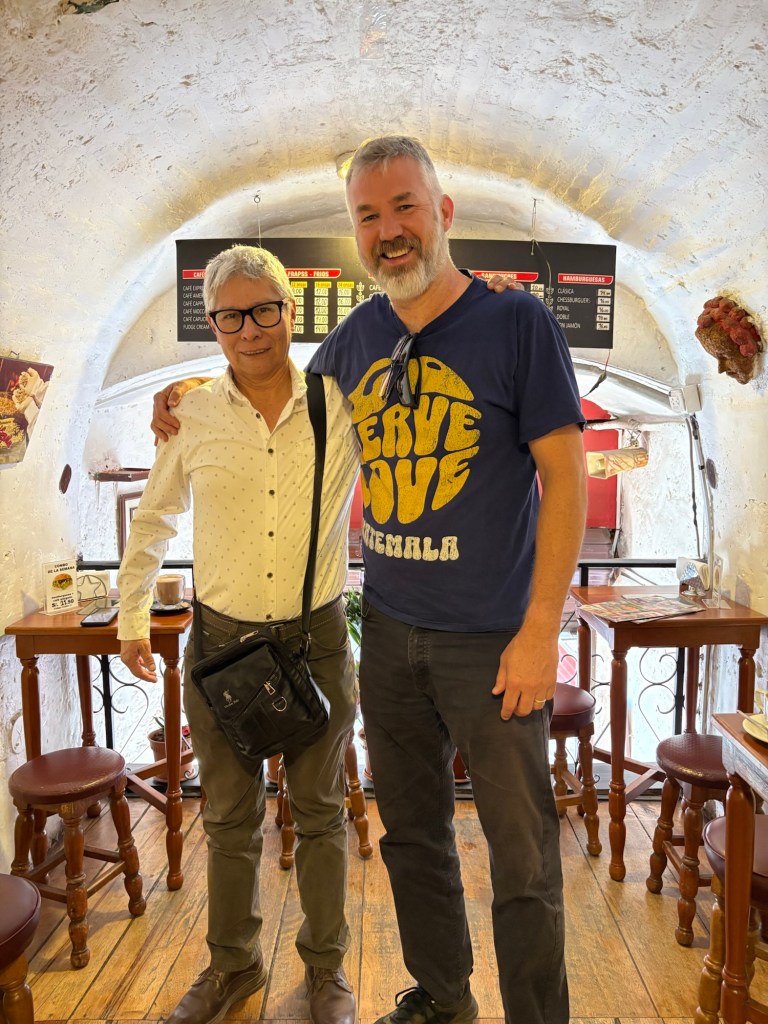
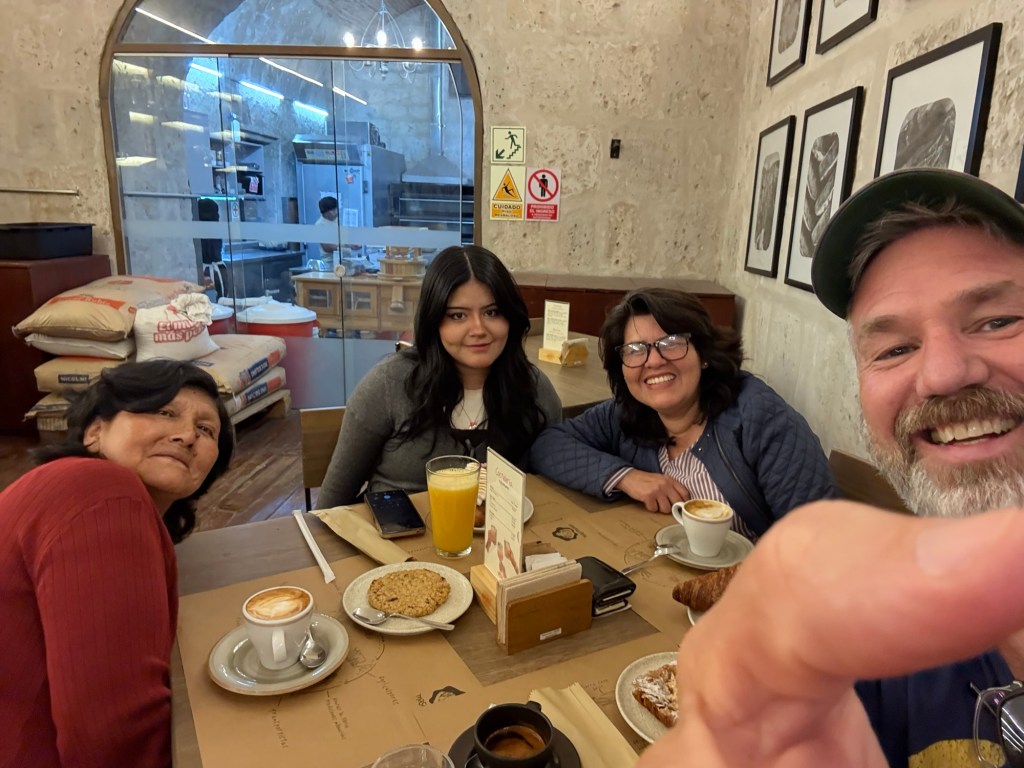
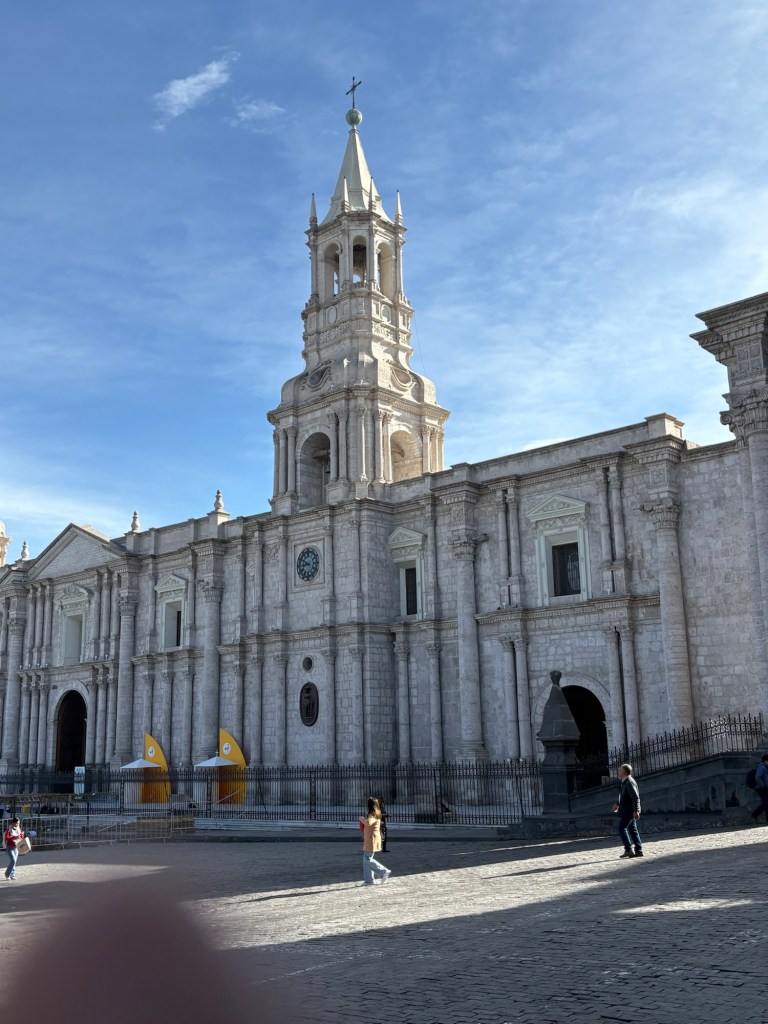
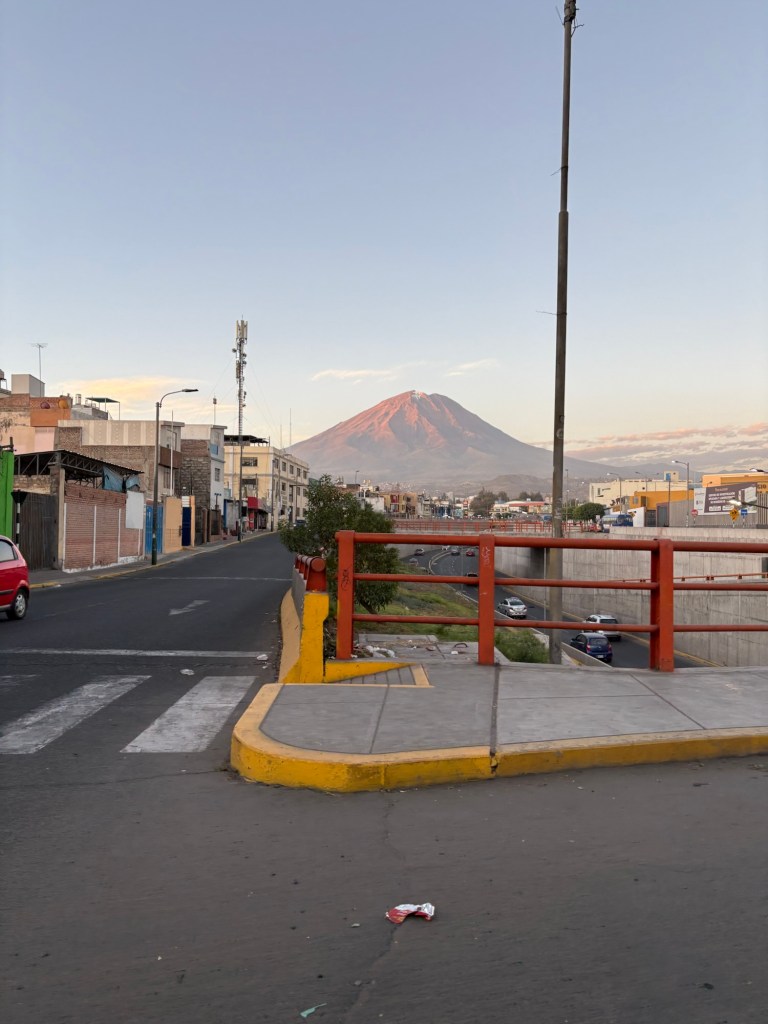
Day 3 in Arequipa! I’ve had a chance to catch up with several brothers and sisters in the Lord who are faithfully bearing spiritual fruit (more on that later). I’ve also taken some time to walk through the city my family and I called home for over five years back in the early 2000s. Since that time, the Lord has continued to shape my understanding of who He is, His work in the world, and what it means to be human—created in His image (Gen 1).

One theme that has grown significantly clearer to me over the past decade is the role of sacrifice and its place in the spiritual life. The idea that sacrifice is foundational to the human experience is often misunderstood or not engaged with in a serious manner in our modern world of “human rights,” technological advances, etc. But Walter Burkert, who wrote extensively on classical civilizations, went so far as to define our race as Homo Necans—“man the killer.”

I’ve engaged with the works of dozens of anthropologists, archaeologists, sociologists, pastors, and theologians on this very subject. What we know historically and biblically about the act of offering something—or someone—through the taking of life, is that it has been universally understood as an act of transcendence; from the material world into an unseen realm of divine beings. In doing so, it somehow alters our experience of the world.

As I made my way down the centuries-old cobblestone streets of Arequipa, I stopped to visit an archaeological exhibit displaying the remains and artifacts of a young girl, known as Juanita or the Inca Ice Maiden. She was sacrificed approximately 500 years ago on Mount Ampato, a high dormant volcano in southern Peru (less than 100 miles from Arequipa). Her offering—after an exhausting ascent into the thin Andean air, under the direction of Incan priests, made to drink intoxicating potions, and ultimately brought to completion by a priest’s mace striking her right temple—is a striking example of a practice both ancient and, I would argue, not so ancient: the ritual sacrifice of humans to the gods of the nations. 

Juanita, aged around 12–15, was led by Incan priests to Ampato to appease the mountain god said to threaten volcanic eruption. But she wasn’t alone—two other high-altitude sacrifices were found with her, a young boy and a young girl, all selected from the elite, “fattened” on the best the empire could offer, then transformed into living divinities through their willing (?) sacrifices. 

This ritual—known as Capacocha (or Qhapaq hucha)—was practiced not only on Ampato but at many Andean peaks throughout Inca and earlier periods. Similar child sacrifices have been found across Europe, Asia, and the Americas. The human story, it seems, is less about giving life and more often about taking it in a sacred transaction.

Juanita’s story – and the innumerable others who have suffered a similar fate in the service of the gods – ought to give us pause on a number of levels. For followers of Jesus, his sacrifice is the Ultimate Human Sacrifice; in one sense the sacrifice to end all sacrifice. But in another, Christ and his Way are the doorway into communion with God. But only Christs sacrifice- and our lives lived in the shadow of his – doesn’t end in the taking of life, but the giving of everlasting life: Resurrection. This is THE distinction of the Christian faith: sacrifice doesn’t end in an appeasing death, but in the communion of the life-giving Spirit.

We Christians ought to reflect deeply on how our modern cultures and societies continue to sacrifice the lives and well-being of others in order to sustain our comfort within the empire—appeasing the gods of scarcity and desire, hidden beneath the shadow of material wealth and human progress. There is always a cost. There is always a sacrifice. And it is worth asking whether we the Church—by our actions or by our silence—are aligning ourselves with Homo Necans or with the Imago Dei.

Return with Words

The Sacrifice of Words  (Hosea 14:2 or 3 in some versions)

Just working again through the prophet Hosea and his inspired words for God’s people who had gone astray. “Take with you words and return to the LORD.” This simple command lies at the heart of Hosea’s final appeal to Israel. The prophet doesn’t call for expensive offerings or dramatic rituals but instead calls on the people to come back to God with something that you can only bring when you know you really have nothing to offer- words. 

In a culture of broken promises (covenants), idolatrous worship, and culturally sanctioned selfishness, the call to return with words emphasizes that genuine repentance begins not in outward performance but in truth-telling. The exile for Israel wasn’t just geographical—it was relational (and we will all understand this experientially sooner or later). Israel had strayed from communion with Yahweh, and now they are told: your words can be the beginning of renewal. 

The line that follows—“we will repay with bulls the vows of our lips”—has long invited both literal and metaphorical readings. The Hebrew phrase is intentionally ambiguous (that drives us modern thinkers crazy, but it’s how He communicates with us:). It could mean offering literal bulls in renewed sacrifice, but more likely, it poetically equates spoken confession with sacrificial offering. The Septuagint (Greek OT) renders this as “the fruit of our lips,” and the New Testament echoes it in Hebrews 13:15. In this view, Hosea is not discarding sacrifice, but recasting it: the words of humble repentance, the naming of sin and longing for restoration, become the truest form of worship. In a prophetic tradition that constantly critiques hollow ritual, this verse draws worship back to its relational foundation.

This passage is a reminder for us today that God is not moved by empty gestures but by the posture of our hearts expressed through honest speech. Imagine what a group of people who choose to live this way could do!!!! When shame or guilt tempts us to hide, Hosea invites us to return with words. Not perfect words. Not religious words. Just truthful, honest ones. Let’s start there: with words that acknowledge our need, ask for healing, and recommit to trust. In the gospel, we find this pattern fulfilled: it is with the heart one believes and with the mouth one confesses unto salvation (Romans 10:10). The bulls of our lips are not blood on an altar, but the fruit of prayers offered in trust—the worship God has always desired.

“In sacrifice and offering you have not delighted,

but you have given me an open ear.

Burnt offering and sin offering

you have not required.

Then I said, ‘Behold, I have come;

in the scroll of the book it is written of me:

I delight to do your will, O my God;

your law is within my heart.’”

Psalm 40:6-8

Shalom